
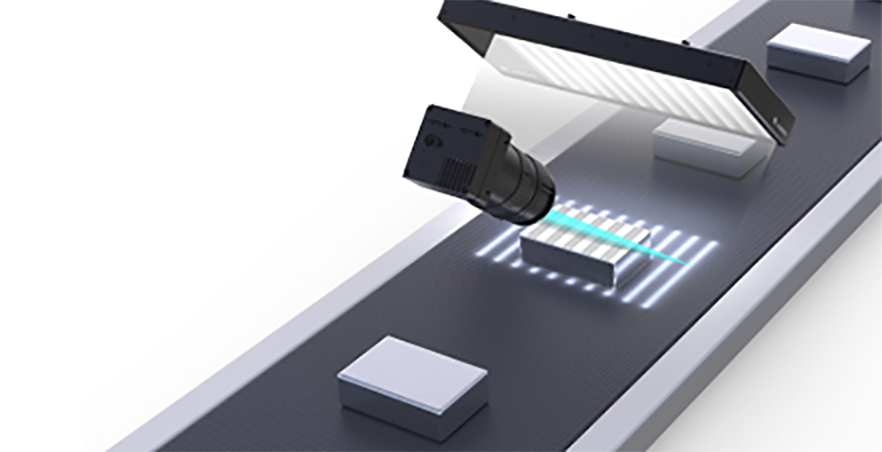


Multi-spectral linescan 3D
2025 07 11
Surveying
Technical Principles and Advantages
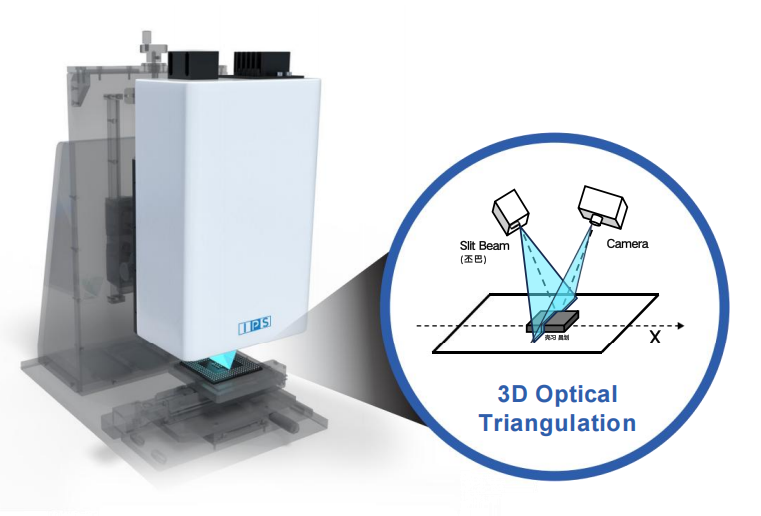
Using optical triangulation, parameters such as the shape and height of an object can be measured at high speed.
A light source is projected onto the measurement object and the reflected light forms an image in the camera at a specific angle. Subsequently, the position of the object is calculated using mathematical triangulation based on the angle between the emitted and received directions.
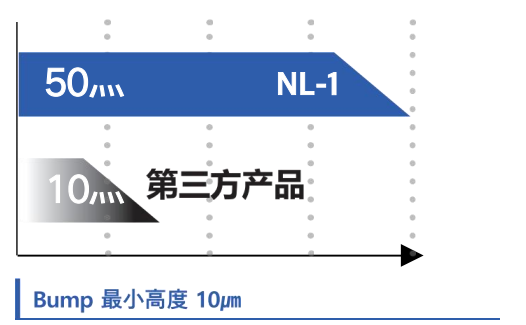
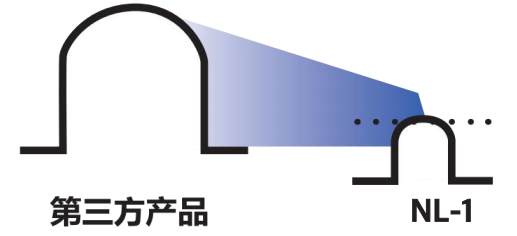
| Wider measurement range than third party products. Depending on the camera specifications, a field of view (FOV) of up to 50 mm can be measured. | Measures smaller bump heights than third party products. Depending on the camera specifications, a field of view (FOV) of up to 50 mm can be measured. |
 |  |
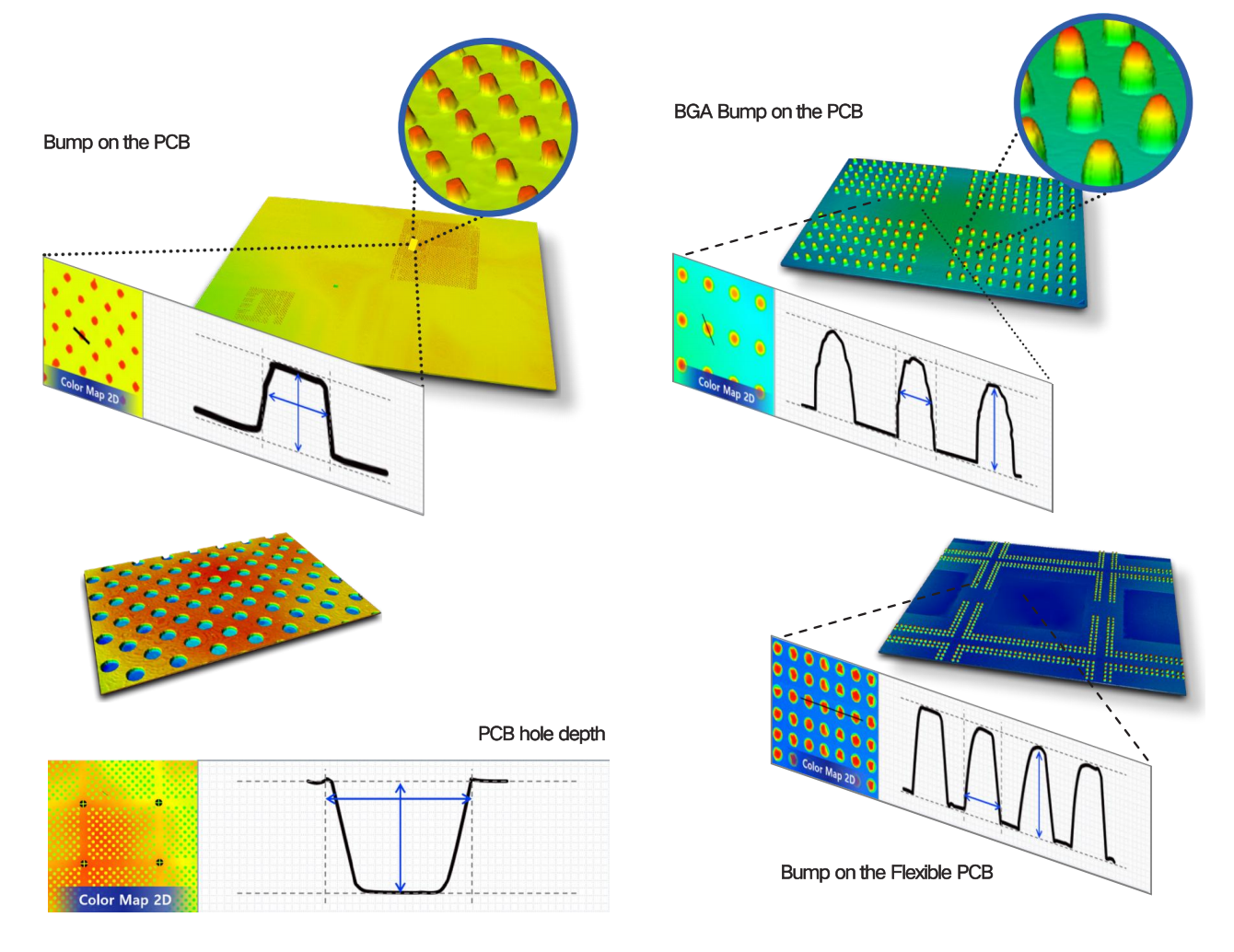
Application Cases
Selection Form
| NL-1 | ||||||
| Model Number | - | Classic I | Classic II | Standard I | Standard II | Standard III |
| Line Width | m | 22 | 43 | 12 | 25 | 50 |
| Line Width | Ⅶ | 5.5 | 11 | 5 | 10 | 20 |
| Horizontal Resolution | Ⅶ | 12 ~ 200 | 100 ~ 800 | 15 ~ 200 | 100 ~ 800 | 800 ~ 1600 |
| Precision | % | 0.5 | 1 | 0.5 | 1 | 2 |
| Repeatability | Ⅶ | 1 | 2 | 1 | 2 | 4 |
| Lens | - | TCL 1.0X | TCL 0.5X | TCL 1.0X | TCL 0.5X | TCL 0.25X |
| Scanning Speed | Max. mm/ sec. | 55 | 110 | 25 | 50 | 100 |
| Packing List | - | 3D Line Scan,PC | ||||
- Prev:None
- Next:WIL-White Light Interference 3D
Latest News